
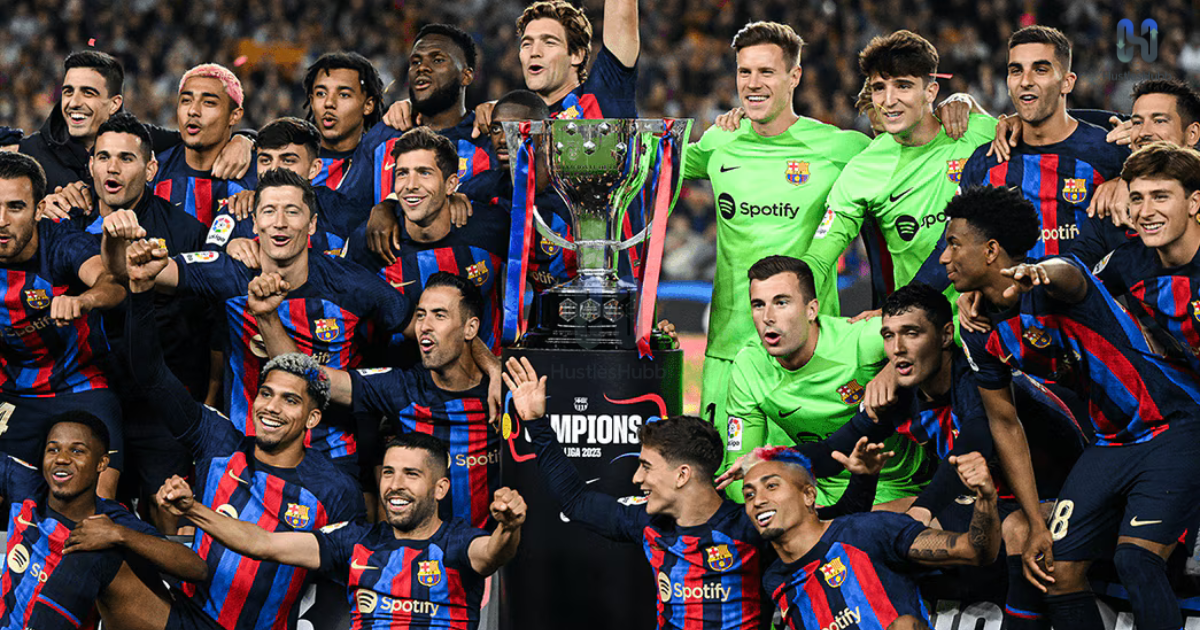
“Discover Barcelona’s Champions League journey, stunning tactics, key players & latest match updates. Europe’s most iconic club is back and better than ever!
Few clubs in world football carry the weight, history, and global magnetism that Barcelona does. From the sun-drenched streets of Catalonia to packed stadiums across Europe, this club has shaped modern football in ways no other institution quite matches. Barcelona’s identity runs deeper than trophies — it’s a philosophy, a culture, and a way of playing the beautiful game that has inspired generations. Under Hansi Flick, a fresh chapter is being written. New faces like Lamine Yamal are carrying the torch. And with the Champions League knockout stage now firmly in focus, the question isn’t whether Barcelona belongs among Europe’s elite. It’s how far they can genuinely go this season.
Barcelona vs Newcastle — Complete Champions League Round of 16 Match Preview
This fixture arrived with enormous weight behind it. Barcelona entered the UEFA knockout stage directly from the group phase without breaking a sweat, while Newcastle had to fight tooth and nail through a punishing play-off round aggregate tie. Newcastle’s 9-3 scoreline in that play-off round sent a clear message to Europe — this team means serious business. The contrast in qualification paths makes this Champions League Round of 16 tie far more interesting than a simple David vs Goliath story.
How Both Clubs Reached the Round of 16
Barcelona’s group-phase dominance meant they bypassed the stress of the play-off round entirely. Newcastle, however, earned their place the hard way — dispatching opponents 9-3 on aggregate in a performance that displayed both clinical finishing and collective tactical discipline. For American fans unfamiliar with how the expanded UEFA knockout stage format works, the play-off round is a genuine elimination gauntlet that tests squad depth before the Round of 16 even begins. Newcastle passed that test with flying colours.
First Leg Venue — St. James’ Park and Its Importance
St. James’ Park is one of England’s most atmospheric grounds, and it carries enormous psychological weight for any visiting European side. Newcastle’s home crowd generates a relentless noise that has genuinely unsettled bigger clubs in recent memory. For Barcelona, managing the first-leg environment at St. James’ Park while protecting key players from bookings is as important as the tactical plan itself. The first leg sets the entire tone for the Camp Nou return leg — and both teams understand that completely.
Barcelona’s Starting Lineup & Flick’s Defensive Reshuffle Explained
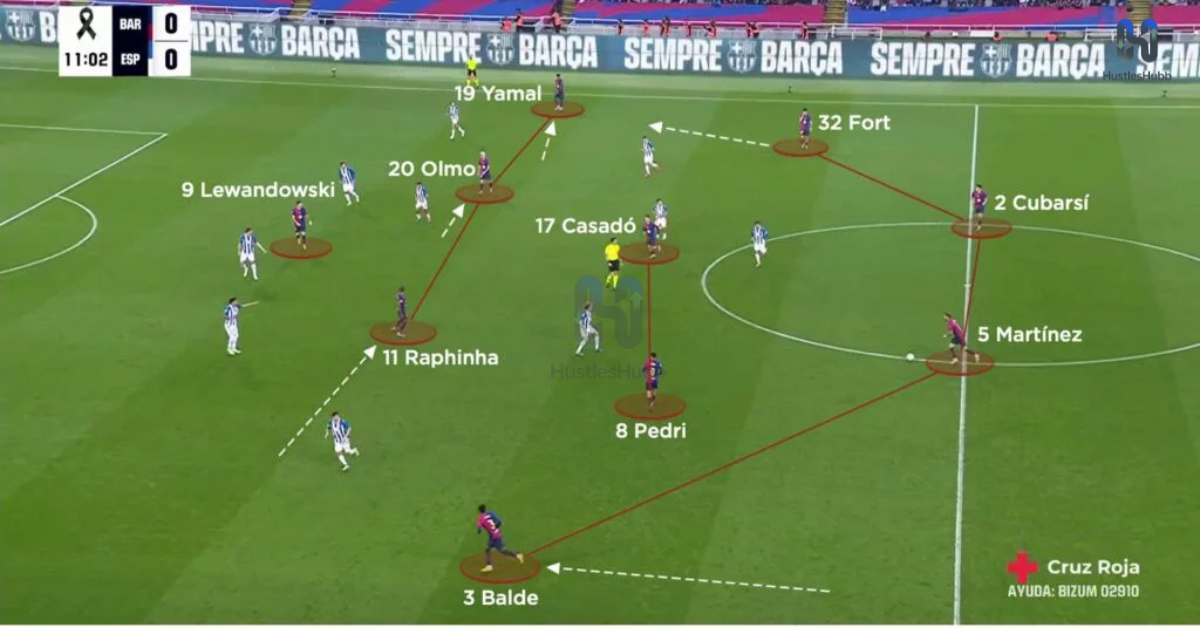
Hansi Flick made a bold, clear statement with his starting XI. He selected Ronald Araujo alongside Marc Cubarsí in central defence and left Eric García on the bench entirely. That isn’t a minor rotation — it’s a deliberate, high-stakes tactical call that reshapes Barcelona’s entire defensive identity for this tie. Flick clearly prioritised physicality and aerial dominance over technical ball-playing qualities, and that decision tells you everything about how he views the Newcastle attacking threat.
| Barcelona Starting Defence | Role | Status |
| Ronald Araujo | Centre-Back | Starting — Yellow Card Alert |
| Marc Cubarsí | Centre-Back | Starting |
| Eric García | Centre-Back | Dropped to Bench |
| Frenkie de Jong | Midfielder | Unavailable |
| First-Choice Full-Backs | Wide Defence | Both Absent |
Why Flick Dropped Eric García — The Tactical Logic
García offers composure and clean ball distribution from the back. But against Newcastle’s relentless pressing and physical directness, Flick clearly decided that Araujo’s aggression and defensive dominance were a better fit. Araujo wins aerial duels at an elite rate and handles physical forwards with composure under pressure. Pairing him with Cubarsí’s reading of the game creates a defensively sound partnership — pragmatic, intelligent, and specifically built for what Newcastle brings.
How Absentees Changed Barcelona’s Tactical Shape
Losing both first-choice full-backs creates wide-channel vulnerability on both flanks. Frenkie de Jong’s absence removes a key creative and defensive-transition midfielder from the equation. Barcelona’s ability to press high and regain shape quickly is compromised without him. Flick had to redesign his pressing triggers and midfield coverage from scratch. It’s a test of true coaching adaptability — and it adds a layer of genuine tactical uncertainty to how Barcelona vs Newcastle actually unfolds on the pitch.
Newcastle vs Barcelona Live Score Updates & Goal-by-Goal Breakdown
The match itself delivered everything neutral observers hoped for. Newcastle pressed high and hard from the very first minute. Barcelona tried to build patiently from the back but found Newcastle’s defensive organisation difficult to bypass cleanly. Lamine Yamal provided Barcelona’s most dangerous moments in transition, while Newcastle’s collective shape made goalscoring opportunities genuinely hard to manufacture consistently throughout the first half.
First Half — Pressing Battles and Missed Opportunities
Newcastle’s energy in the first half was exceptional. They won second balls consistently and pressed Barcelona’s defenders into uncomfortable situations repeatedly. Yamal and Fermín López created flashes of attacking quality but couldn’t find the decisive final touch. Joan García, in goal for Barcelona, made at least one crucial intervention to deny a clean Newcastle chance. The first half ended with both teams cancelling each other out — a tactical stalemate that suited Newcastle’s game plan perfectly.
Barcelona’s Best Chances — Yamal, Fermin & the Near Misses
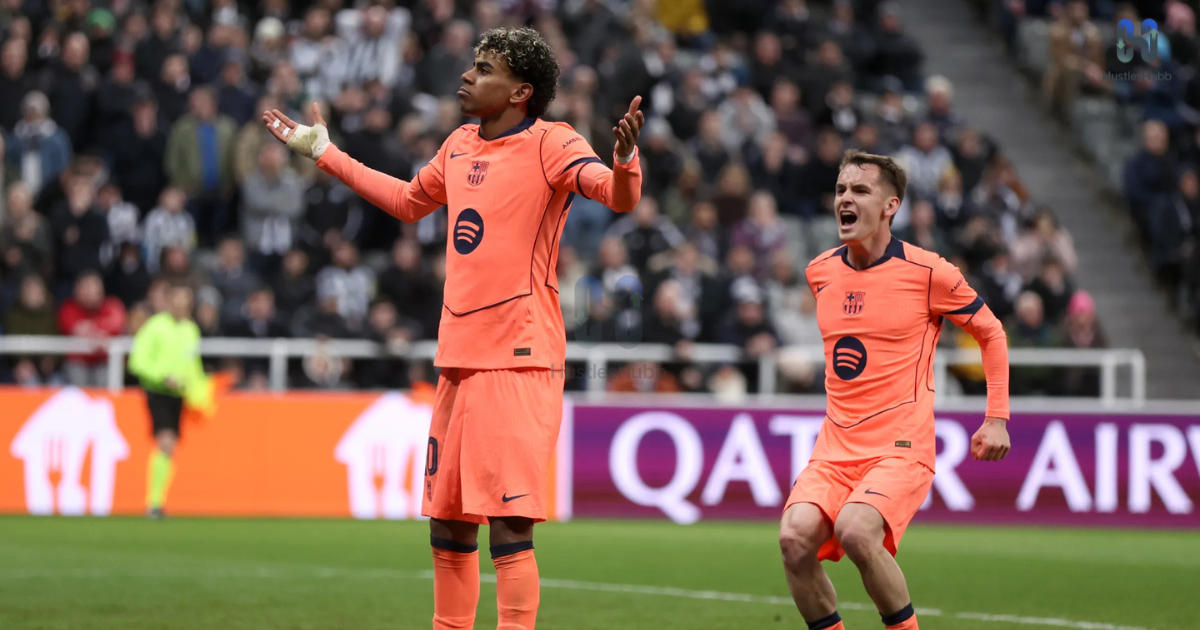
Lamine Yamal was simply Barcelona’s most dangerous weapon throughout this match. His directness in one-on-one situations created genuine panic in Newcastle’s defensive lines. He’s the kind of player who makes defenders doubt themselves before he even touches the ball. But the yellow-card suspension risk hanging over him forced Flick to manage his aggression carefully — a tension that visibly affected how freely Yamal expressed himself in the final third.
Yamal’s Dribbles, Shots and Near-Goals Analysed
Every time Lamine Yamal received the ball in wide areas, the crowd held its breath. His ability to shift direction at full speed and commit defenders is genuinely elite. He forced multiple corners and created two clear half-chances that better finishing — or slightly different angles — would have converted. The yellow card suspension risk placed an invisible ceiling on how aggressively he could pursue duels. When that ceiling lifts in the return leg, Newcastle’s wide defenders face a seriously uncomfortable evening.
Newcastle’s Defensive Heroics Against Barcelona’s Attack
Newcastle’s defensive organisation against Barcelona was genuinely impressive. Eddie Howe set up a compact, disciplined defensive block that denied Barcelona the space to build attacking momentum consistently. The collective discipline across all four defensive positions was exactly what the occasion demanded. This wasn’t reactive or lucky defending — it was a carefully designed tactical structure executed with intelligence and collective commitment from the first minute to the last.
How Newcastle Neutralised Barcelona’s Pressing System
Howe built Newcastle’s defensive structure around denying Barcelona’s forwards the space they need to press effectively. By sitting slightly deeper and playing through the press quickly with direct passes, Newcastle bypassed Barcelona’s first line of pressure repeatedly. Joelinton was particularly effective in shielding the defensive line and winning physical battles in the midfield transition zone. That collective pressing-resistance disrupted Barcelona’s rhythm and kept the
Burn, Joelinton, and Playing on the Disciplinary Edge
Both Burn and Joelinton entered this fixture on yellow card suspension risk — the same tightrope as Barcelona’s danger players. Howe managed both players carefully throughout the game. Neither picked up a caution despite playing physical, combative roles against a technically gifted Barcelona side. That discipline under pressure is underrated. Staying on the pitch and staying available for the Camp Nou return leg is a tactical win in itself for Newcastle’s two most physically influential players.
Camp Nou Seating Capacity Expanded for Barcelona vs Newcastle Clash
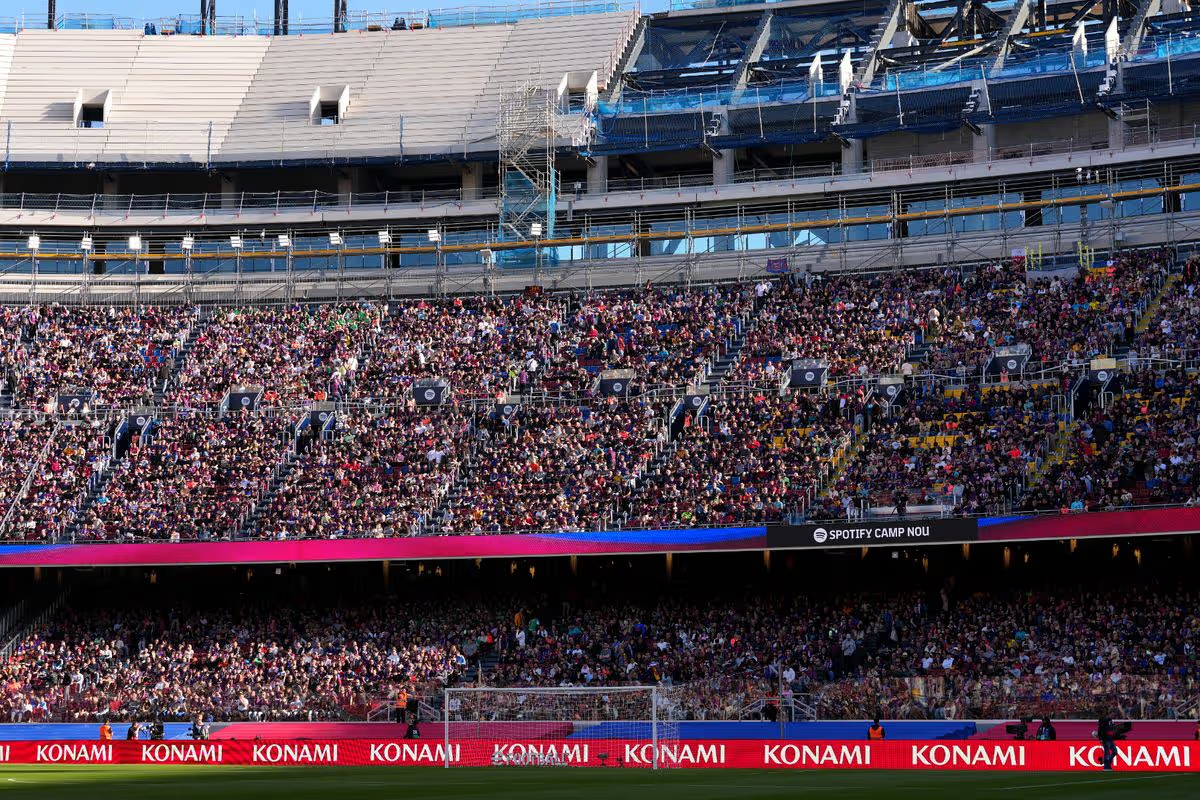
The return leg venue at Camp Nou carries its own storyline entirely. Barcelona received permission to increase seating capacity for the Newcastle home leg — a move driven by enormous global demand for this Champions League Round of 16 fixture and the ongoing renovations that have reshaped the stadium’s infrastructure. More seats mean a louder, fuller Camp Nou atmosphere. For a Barcelona side needing home advantage to push through the tie, that matters enormously.
What Expanded Capacity Means for Atmosphere and Ticket Access
A fuller Camp Nou generates the kind of atmospheric pressure that genuinely affects opposing players and managers. Barcelona knows their home crowd is one of their greatest European assets. The expanded capacity amplifies that advantage significantly. American soccer fans tracking this tie should note that Camp Nou’s renovation timeline means facilities are still evolving — and the atmosphere in an expanded, near-full stadium during a UEFA knockout stage match is an entirely different experience from regular domestic fixtures.
How USA Fans Can Watch the Return Leg Live
American audiences can catch the Camp Nou return leg live on Paramount+ and CBS Sports — the primary broadcasters holding Champions League rights in the United States. Kick-off times for European matches typically fall around 3:00 PM Eastern, 2:00 PM Central, and 12:00 PM Pacific. Setting your reminder now avoids missing a second-leg that could deliver everything — drama, goals, late twists, and a Camp Nou atmosphere at full volume.
| US Time Zone | Approximate Kick-Off Time |
| Eastern (EST) | 3:00 PM |
| Central (CST) | 2:00 PM |
| Mountain (MST) | 1:00 PM |
| Pacific (PST) | 12:00 PM |
| Streaming Platform | Paramount+ / CBS Sports |
Ticket Freeze & Security Concerns Surrounding Barcelona’s Home Leg
FC Barcelona took the extraordinary step of pausing FC Barcelona ticket sales for the Camp Nou return leg entirely. The club detected allocations that would have placed visiting supporters outside the designated away fans segregation zones — a serious operational red flag that demanded immediate action. The club introduced nominal tickets, suspended box-office transactions, and imposed strict stadium security measures restricting rival clothing and symbols to the visitor sector only. It’s a firm, comprehensive response — and it raises serious questions about how ticketing infrastructure handles elite European demand.
Why Barcelona Paused Ticket Sales — The Full Story
Barcelona’s club statement explained the pause as a direct response to detected irregular allocations. Nominal tickets — tied to specific purchaser identity — were introduced to reduce transferability through unofficial resale channels. No sales at the box office removed the easiest access point for supporters attempting to circumvent zone restrictions. The stated goal is preventing a repeat of a prior episode where visiting fans materially altered stadium atmosphere and undermined away fans’ segregation protocols. The logic is sound. The execution must now match the ambition of the announcement.
What Must Happen Before the Camp Nou Return Leg
Transparency is the missing ingredient here. Barcelona must publish clear, specific enforcement mechanisms — not just policy statements. Match organisers need to actively monitor travel accreditation and resale channels that have already been flagged as irregular. UEFA itself must verify that stadium security measures are independently enforced rather than simply self-reported by the hosting club. Legitimate season-ticket holders and local supporters shouldn’t bear the burden of these controls disproportionately. Governance must be visible, accountable, and followed through completely before the Camp Nou return leg kicks off.
Key Stats & Player Ratings — Barcelona’s Performance in the Round of 16
The numbers from the first leg tell a nuanced story. Barcelona dominated possession but struggled to convert territorial control into clear goalscoring chances consistently. Lamine Yamal topped the dribble completion charts. Fermín López created the most chances of any Barcelona midfielder. Ronald Araujo won the highest percentage of his aerial duels from the Barcelona backline. Those individual performances demonstrate quality, but the collective output fell slightly short of what the team’s possession statistics would suggest.
| Player | Key Stat | Rating |
| Lamine Yamal | Most dribbles completed | 8.5/10 |
| Fermín López | Most chances created (midfield) | 8/10 |
| Ronald Araujo | Aerial duel win rate: 85% | 8/10 |
| Joan García | Key saves to deny Newcastle | 7.5/10 |
| Joelinton | Highest defensive actions | 8.5/10 |
| Burn | Zero fouls under pressure | 8/10 |
Barcelona’s Top Statistical Performers — Numbers That Matter
Yamal’s dribble success rate and Fermín’s chance creation numbers confirm that Barcelona’s attacking threat is genuine even when the goals don’t arrive. Araujo’s defensive dominance in the air — managing the threat without the support of first-choice full-backs alongside him — represents one of the most impressive individual defensive performances of this UEFA knockout stage round. Marc Cubarsí also quietly delivered composure numbers that suggest Barcelona’s improvised central defence performed significantly above initial expectations.
Newcastle’s Numbers — Where They Matched Barcelona Statistically
Newcastle matched Barcelona in one crucial area above all others — defensive actions per 90 minutes. Their interception and clearance numbers were elite for this stage of the competition. Expected goals data suggested Newcastle created more than the scoreline reflects. Joelinton and Burn topped Newcastle’s individual defensive charts. On the attacking side, Osula’s directness created positional discomfort for Araujo and Cubarsí on multiple occasions — generating a higher xG contribution than his youth and inexperience might suggest.
Barcelona Transfer News & Squad Depth Heading Into the Knockout Stage
Barcelona’s squad depth issues are real — and they’re actively exploring the transfer market to address them. The club has been linked with an out-of-contract Borussia Dortmund star alongside Arsenal in what would be a genuinely competitive pursuit for a technically gifted Premier League vs La Liga transfer tug-of-war. Adding quality in the positions where Barcelona currently lacks depth isn’t a luxury at this stage of the season. It’s a genuine competitive necessity for any realistic hope of a deep Champions League run.
Transfer Links and Why They Matter Right Now
Barcelona’s reported interest in an out-of-contract Dortmund player addresses a specific positional need that the current squad depth doesn’t adequately cover. A Premier League vs La Liga transfer battle signals that Barcelona is competing at the highest commercial and sporting level for elite talent. Securing that signature — or missing out on Arsenal — will shape whether Flick has genuine options to rotate during the Camp Nou return leg and beyond. Transfer decisions made in March directly impact European knockout outcomes in April and May.
Can Barcelona’s Squad Handle a Deep UCL Run?
Honestly? It’s genuinely uncertain right now. The full-back absences create structural vulnerability that no amount of tactical creativity completely resolves. Frenkie de Jong’s unavailability removes a unique profile from midfield that Barcelona doesn’t possess elsewhere in the squad. Yellow card suspension risk across Yamal, Casadó, Fermín, and Gerard Martín means a single bad-tempered match could decimate a crucial second leg. Squad depth isn’t a marginal issue — it’s the central question defining whether Barcelona’s European knockout history gets a new chapter or another painful exit.
What’s Next for Barcelona After the Newcastle Champions League Tie?
Beyond this tie, Barcelona’s road to the Champions League final runs through potential quarter-final opponents that could include Real Madrid, Manchester City, or any other surviving heavyweight. The squad health, disciplinary management, and tactical evolution that Flick demonstrates across these two legs against Newcastle will signal definitively whether this Barcelona project is ready to go all the way in Europe — or whether it needs another full season to mature into genuine continental contenders.
What Flick Must Fix for the Camp Nou Return Leg
Flick needs more clinical finishing from his forwards in the return leg. Yamal and Fermín created enough chances in the first leg to score — converting those opportunities at Camp Nou is non-negotiable for progression. Defensively, tighter full-back cover must be improvised to handle Newcastle’s wide transition threat. Protecting yellow-carded players until absolutely necessary — and trusting bench options to deliver when called upon — will define whether Barcelona’s home advantage translates into genuine progression.
Barcelona’s Route to the Champions League Final
If Barcelona overcomes Newcastle across both legs, the quarter-final draw presents its own enormous challenge. Potential opponents include some of the most tactically sophisticated squads in European football. Barcelona’s European knockout history against English clubs adds psychological weight to every subsequent round — especially if Premier League vs La Liga matchups continue to materialise. A final in late May would represent the pinnacle of Flick’s first full season in charge. The foundation is there. The execution across these two legs will tell the whole story.
FAQs
Who is Barcelona’s most exciting player right now?
Lamine Yamal is undoubtedly Barcelona’s brightest star. His electrifying dribbles and match-winning ability make him the most exciting young talent in European football today.
How did Barcelona qualify for the Champions League Round of 16?
Barcelona advanced directly from the group phase without playing the play-off round. Their dominant group-stage performances earned them automatic entry into the knockout stage.
Who is Barcelona’s current manager?
Hansi Flick took charge of Barcelona ahead of this season. His high-pressing, attack-minded philosophy has already transformed the team’s energy and European ambitions significantly.
Why did Barcelona pause ticket sales for the Newcastle home leg?
Barcelona suspended FC Barcelona ticket sales after detecting irregular allocations placing away fans outside designated zones. Strict nominal tickets and security controls were immediately introduced.
What is Barcelona’s biggest weakness heading into the knockout stage?
Barcelona’s biggest concern is squad depth. Missing first-choice full-backs and Frenkie de Jong, combined with yellow card suspension risk across four key players, creates serious selection pressure for Hansi Flick.
Read Also: 2026 Winter Olympics Alpine Skiing: 10 Thrilling Moments

Welcome to Hustles Hubb! I’m Shafqat Amjad, an AI-Powered SEO and Content writer with 4 years of experience.
I help websites rank higher, grow traffic, and look amazing. My goal is to make SEO and web design simple and effective for everyone.
Let’s achieve more together!