
“Stryker Cyber attack exposed global healthcare vulnerabilities. Discover who hacked Stryker, what was stolen & how it impacts you.”
Nobody expects a medical technology giant to become a headline cybersecurity nightmare overnight. Yet that’s exactly what happened when the Stryker cyber attack blindsided one of America’s most trusted healthcare corporations. Stryker Corporation, headquartered in Portage, Michigan, supplies life-saving surgical equipment and medical devices to hospitals across 75-plus countries. Then Iran-linked hackers from the Handala hacker group struck without warning. Employees lost system access instantly.
Global network disruption paralysed operations across multiple continents simultaneously. The cyberattack on the healthcare company’s infrastructure of this magnitude sent immediate shockwaves through the United States medical technology industry. This article uncovers exactly what happened, who’s responsible, and why every healthcare organisation must pay serious attention right now.
Stryker Cyber Attack Explained: What Happened to the Global Medical Company
The Stryker cyber attack wasn’t a minor glitch or a small data hiccup. It was a full-scale cyberattack on Stryker systems that disrupted operations across multiple countries simultaneously. Stryker Corporation, headquartered in Portage, Michigan, provides surgical equipment, medical devices, and hospital technology to facilities worldwide. When attackers breached their infrastructure, the consequences rippled far beyond a single office or department. This was a coordinated, deliberate strike against a company embedded in the daily operations of hospitals everywhere.
Who Is Stryker Corporation and Why Does It Matter?
Stryker Corporation is one of the world’s largest medical technology companies. They manufacture surgical robots, orthopaedic implants, hospital beds, and emergency medical equipment used in facilities across over 75 countries. Their acquisition of OrthoSpace — an Israeli medical technology firm specialising in shoulder repair devices — expanded their global footprint significantly. Losing access to Stryker’s systems doesn’t just hurt a corporation. It directly impacts the hospitals and patients, depending on their technology, every single day.
How the Stryker Cyber Attack Disrupted Global Systems and Employees
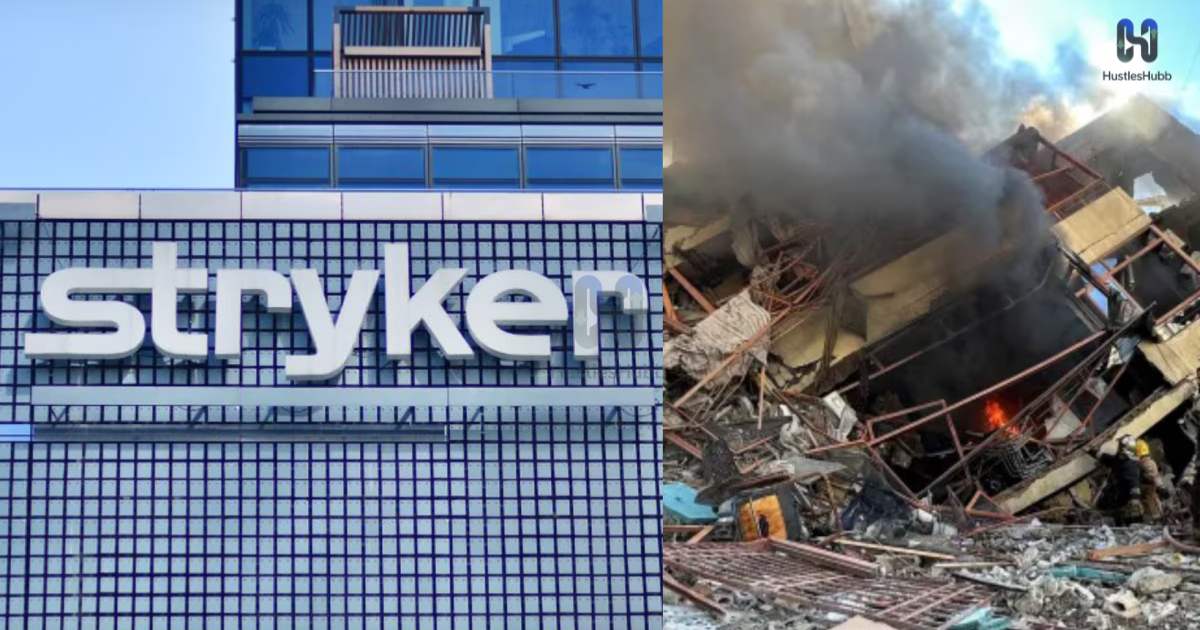
The immediate operational chaos following the Stryker cyber attack was significant and far-reaching. Employees locked out of systems found themselves unable to access emails, internal databases, project management tools, or communication platforms. Entire departments ground to a halt. Teams coordinating medical device shipments, hospital contracts, and technical support couldn’t perform basic functions. The Stryker global operations disruption exposed just how deeply modern corporations depend on seamlessly connected digital infrastructure to function at any level.
Internal System Shutdowns and Operational Chaos
The Stryker Microsoft environment attack effectively paralysed the company’s internal communication channels. Departments operating across different time zones lost the ability to coordinate. The global network disruption meant that regional offices in Europe, Asia, and the Americas were simultaneously cut off from centralised operational systems. No access to inventory. No access to customer records. No access to device maintenance logs. The domino effect of a single successful breach cascaded across an entire global enterprise almost instantly.
Employee Data Exposure and Workforce Impact
Beyond operational chaos, the employees locked out of systems faced a deeply personal threat. Personal employment data — including contact information, payroll details, and internal communications — was potentially exposed during the breach. Stryker Corporation notified affected staff and engaged external cybersecurity specialists immediately. However, the psychological impact on a global workforce suddenly uncertain about their personal data security shouldn’t be underestimated. Trust between employer and employee — once fractured by a corporate cyberattack incident — takes considerable time and transparency to rebuild.
Who Is Behind the Stryker Cyber Attack? Iran-Linked Hacker Group Handala
The group claiming responsibility for the Stryker cyber attack wasn’t anonymous. Handala — an Iran-linked hacker collective with a documented history of targeting Western and Israeli-aligned corporations — publicly claimed the attack. Handala operates within the broader ecosystem of Iran’s cyber warfare activities and has been linked by cybersecurity researchers to both the Islamic Revolutionary Guard Corps and the Ministry of Intelligence and Security. Their targeting patterns consistently align with Iran’s geopolitical adversaries — particularly companies with ties to the United States and Israel.
Who Is Handala? The Iran-Linked Threat Actor Explained
Handala emerged as a notable Iran-linked cyber threat actor in recent years. Researchers connect the group to Iran’s state intelligence apparatus — specifically the Islamic Revolutionary Guard Corps and the Ministry of Intelligence and Security. Their operations reflect Iran’s cyber warfare activities designed to destabilise Western corporations and governments. Unlike purely criminal groups motivated by financial gain, Handala pursues ideological and geopolitical objectives. That makes them more dangerous in some respects — they’re willing to cause maximum disruption without necessarily demanding a ransom payment.
Why Stryker Became a Target in the Stryker Cyber Attack
Stryker Corporation didn’t become a target randomly. Their acquisition of OrthoSpace — an Israeli medical technology company — placed them squarely in Handala’s crosshairs. The group specifically targets corporations with demonstrable ties to Israel as part of the broader Axis of Resistance ideology driving Iran’s geopolitical strategy. A major U.S. medical corporation with Israeli business connections represents precisely the kind of symbolic and strategic target that Iran’s cyber warfare activities are designed to strike for maximum geopolitical messaging.
Stryker’s Global Footprint Made It an Irresistible Target
Stryker Corporation generates billions in annual revenue and supplies medical technology to hospitals across 75-plus countries. Their Portage, Michigan headquarters coordinates a global operation touching virtually every major healthcare system on earth. That scale creates an irresistible appeal for groups conducting Iran’s cyber warfare activities against U.S. corporate interests. The bigger the company and the broader its hospital network connections, the more damage a successful cyberattack on a U.S. company of this profile can realistically deliver.
Timeline of the Stryker Cyber Attack and Key Events
Understanding how the Stryker cyber attack unfolded chronologically helps explain both the scale of damage and the adequacy of the response. The attack followed a pattern consistent with Iran-linked hackers — careful pre-breach reconnaissance, exploitation of a specific vulnerability within the Microsoft environment, followed by rapid lateral movement across internal systems. The timeline below reconstructs the key events based on available reporting and cybersecurity analysis.
| Phase | Event | Timeframe |
| Pre-Attack | Reconnaissance of Stryker’s Microsoft environment | Within the first week |
| Initial Breach | Unauthorised access gained to internal systems | Day 1 |
| Lateral Movement | Weeks before the breach | Days 1–3 |
| Detection | Internal security teams identify anomalous activity | Day 3–4 |
| Public Claim | Handala claims responsibility publicly | Within first week |
| Containment | External cybersecurity firms engaged | Day 5–7 |
| FBI Involvement | Federal investigation launched | Day 7+ |
Day-by-Day Breakdown of the Attack
The Stryker cyber attack followed a methodical progression. Initial entry exploited a vulnerability in Stryker’s Microsoft environment — the company’s primary cloud infrastructure. Within days, attackers had moved laterally across systems in multiple countries, accessing employee credentials and operational data. The global network disruption became visible to staff when login failures began cascading across departments. By the time containment efforts began, the breach had already achieved significant penetration depth across Stryker Corporation’s global infrastructure.
Impact of the Stryker Cyber Attack on Hospitals and Medical Technology

Hospitals dependent on Stryker Corporation technology felt the impact of this medical technology company’s cyberattack almost immediately. Device calibration updates, technical support access, software maintenance portals, and supply chain communications all faltered. Surgical departments using Stryker robotic and orthopaedic equipment found their technical support pipelines disrupted. The cybersecurity threat to healthcare sector organisations isn’t abstract — it manifests as delayed procedures, confused supply chains, and overwhelmed IT departments trying to manage the fallout from a breach they didn’t cause.
How Hospitals Were Affected
Hospitals in multiple countries reported disrupted access to Stryker technical support platforms following the cyberattack on Stryker systems. Surgical teams using Stryker robotic surgery platforms experienced software access issues. Procurement teams couldn’t access order management systems. The corporate cyberattack incident turned routine hospital operations into manual, time-consuming workarounds — placing additional pressure on already-stretched healthcare staff managing their own operational demands simultaneously.
Long-Term Consequences for MedTech
The medical technology company’s cyberattack accelerated regulatory pressure from the FDA on medical device manufacturers to meet stricter cybersecurity standards. Post-incident analysis revealed that many MedTech companies operate with cybersecurity frameworks inadequate for the current threat environment of Iranian cyber warfare activities. Stryker Corporation’s reputational exposure — despite being a victim rather than a negligent actor — demonstrates how corporate cyberattack incidents generate lasting commercial consequences regardless of fault.
How Stryker Responded to the Stryker Cyber Attack Crisis
Stryker Corporation responded to the Stryker cyber attack with a coordinated combination of immediate containment measures and transparent external communication. Their official statement acknowledged the cyberattack on Stryker systems and confirmed that third-party cybersecurity specialists had been engaged to manage the incident. Systems were isolated. Access credentials were reset across the global network. And the FBI was notified to begin a formal investigation into the Iran-linked hackers responsible for the breach.
Stryker’s Official Statement and Immediate Actions
Stryker Corporation issued a formal statement confirming the cyberattack on Stryker systems and outlining immediate containment steps. External cybersecurity firms with experience in Iran-linked hacker threat management were brought in rapidly. System isolation protocols prevented further lateral movement across the global network disruption zone. The FBI engagement added federal investigative resources and connected the incident to existing intelligence on Handala and Iran’s cyber warfare activities targeting U.S. corporations across multiple sectors.
Long-Term Recovery and Rebuilding Trust
Stryker Corporation’s long-term recovery strategy focused on three pillars — infrastructure hardening, transparent stakeholder communication and regulatory compliance. Upgrading their Microsoft environment security architecture was the most immediate technical priority. Rebuilding confidence among hospital partners required direct outreach and demonstrable evidence of improved security posture. Compliance reporting to relevant US regulatory bodies — including notifications required under federal data breach disclosure laws — formed the third essential component of a credible, accountable recovery process.
Cybersecurity Lessons From the Stryker Cyber Attack for Global Companies
Every major corporate cyberattack incident teaches the broader business community something valuable — if organisations are willing to listen honestly. The Stryker cyber attack revealed specific, addressable failures that companies across every sector should examine immediately. The lessons aren’t theoretical. They’re practical, urgent, and directly applicable to any organisation operating complex digital infrastructure in today’s Iranian cyber warfare activities threat environment.
| Cybersecurity Failure | Lesson Learned | Priority |
| Insufficient network segmentation | Isolate critical systems immediately | Critical |
| Delayed breach detection | Deploy real-time monitoring tools | Critical |
| Build a crisis playbook before breach | Enforce zero-trust architecture | Critical |
| Outdated legacy infrastructure | Regular security patching schedule | High |
| Slow public communication | Transparency builds faster trust | High |
| No pre-built incident response plan | Build a crisis playbook before a breach | Critical |
The Biggest Cybersecurity Failures the Attack Revealed
The Stryker cyber attack exposed gaps in network segmentation that allowed attackers to move laterally across the Microsoft environment rapidly once initial access was gained. Real-time monitoring failures meant the breach persisted for days before detection. Michael Vatis, with his deep FBI cybersecurity background, has argued publicly that delayed detection is consistently the most costly failure in corporate cyberattack incidents — because every additional hour of undetected access multiplies the damage exponentially. These aren’t exotic failures. They’re common ones — and that’s precisely what makes them so damaging.
What Every Global Corporation Should Do Differently
The Stryker cyber attack makes one recommendation unavoidable — every large organisation must build a dedicated incident response team before a breach occurs, not after. Cyber insurance provides financial cushioning but doesn’t reduce operational damage or reputational harm. Mandatory cybersecurity audits — particularly for companies with Israeli medical technology partnerships or other geopolitically sensitive business relationships — should be treated as non-negotiable operational requirements in the current Iran cyber warfare activities threat landscape.
What the Stryker Cyber Attack Means for Future Healthcare Cybersecurity
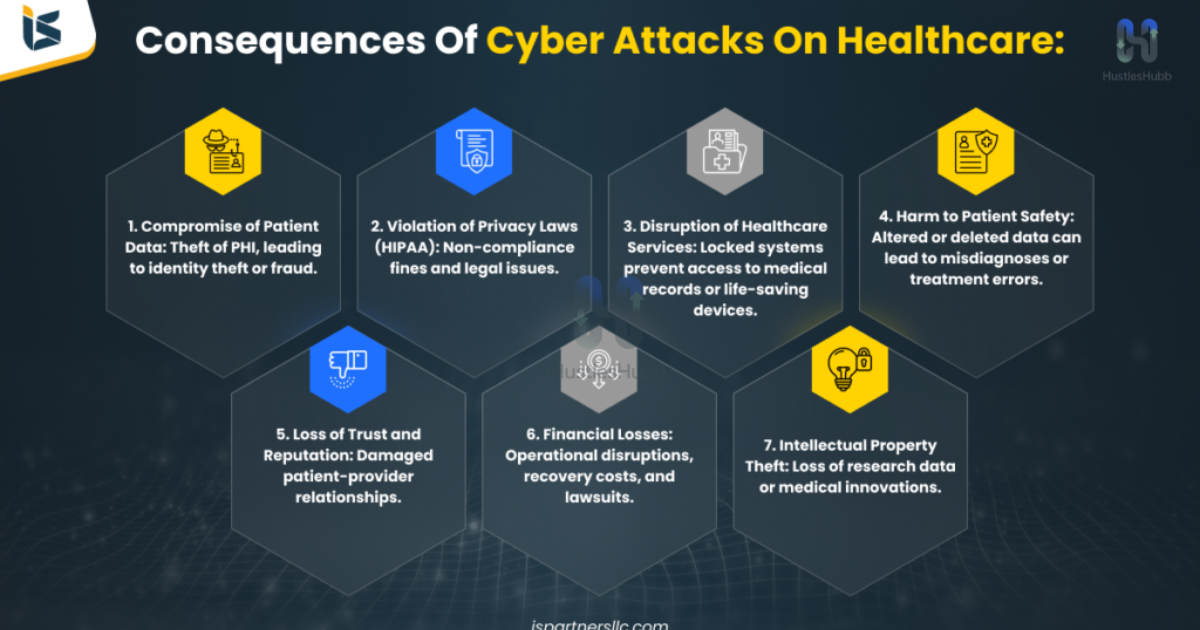
The Stryker cyber attack represents a watershed moment for the cybersecurity threat to the healthcare sector conversation in the United States. Policymakers, regulators, and corporate boards can no longer treat healthcare cybersecurity as a compliance checkbox rather than a genuine strategic priority. The geopolitical context — escalating U.S.–Israel strikes on Iran, tensions around the Strait of Hormuz, and Iran’s Axis of Resistance doctrine — guarantees that Iran-linked hackers will continue targeting U.S. corporations with Israeli business ties for the foreseeable future.
How This Attack Is Reshaping US Healthcare Cybersecurity Policy
Post-Stryker cyber attack, the FDA and CISA accelerated guidance on medical device cybersecurity standards. Congressional discussions around mandatory minimum cybersecurity requirements for medical technology company vendors supplying US hospitals gained significant momentum. Kash Patel’s FBI has signalled a more aggressive stance toward Iran-linked hackers targeting U.S. corporate infrastructure — including potential offensive cyber responses to groups like Handala operating under Islamic Revolutionary Guard Corps direction.
The Future of Cybersecurity in Medical Technology
AI-powered threat detection is rapidly becoming standard equipment for serious MedTech cybersecurity programmes. The shift from reactive breach response to proactive threat hunting reflects a genuine industry maturity moment accelerated by incidents like the Stryker cyber attack. Future medical devices must embed security architecture from the design stage — not as an afterthought applied after regulatory pressure. Stryker Corporation’s experience will shape procurement standards, regulatory requirements and board-level cybersecurity investment decisions across the medical technology sector for years to come.
How Organizations Can Prevent Attacks Like the Stryker Cyber Attack
Prevention is always better than recovery — and the Stryker cyber attack provides a detailed, real-world blueprint of exactly what organisations must address before Iran-linked hackers identify them as their next target. The framework below applies to any company operating complex digital infrastructure, but it’s especially critical for organisations in the cybersecurity threat to the healthcare sector environment where operational disruption carries direct patient safety implications.
| Prevention Step | Action Required | Priority |
| Zero-Trust Architecture | Verify every user and every device | Critical |
| Real-Time Threat Monitoring | Deploy 24/7 Security Operations Centre | Critical |
| Employee Security Training | Quarterly phishing simulation exercises | High |
| Regular Penetration Testing | Bi-annual third-party security audits | High |
| Data Encryption Standards | End-to-end encryption across all systems | Critical |
| Incident Response Planning | Pre-built crisis response playbook | Critical |
| Vendor Security Assessment | Audit all third-party technology partners | High |
A Practical Prevention Framework for Healthcare Companies
Zero-trust architecture is the single most important structural defence against Iran-linked hackers using lateral movement techniques like those deployed in the Stryker cyber attack. Verifying every user and every device — regardless of whether they’re inside or outside the corporate network — eliminates the assumption of trust that attackers routinely exploit. Combining zero-trust with real-time threat monitoring and pre-built incident response plans creates a defensive posture genuinely capable of limiting breach damage when — not if — an attack attempt occurs.
Building a Cyber-Resilient Organisation
Cybersecurity resilience starts at the boardroom level. When leadership treats cybersecurity threats to the healthcare sector risks as a genuine strategic priority — rather than an IT department problem — investment follows. Partnering with CISA and the FBI creates access to threat intelligence specifically relevant to Iran’s cyber warfare activities targeting U.S. corporations. Culture matters as much as technology. An organisation where every employee understands basic security hygiene is significantly harder to breach than one relying entirely on technical defences alone.
FAQs
What is the Stryker Cyber Attack?
The Stryker cyber attack was a major breach of Stryker Corporation’s global digital infrastructure. Iran-linked hackers from the Handala group targeted their Microsoft environment, locking employees out of systems and causing significant global network disruption across multiple countries.
Who hacked Stryker Corporation?
The Handala hacker group — linked to Iran’s Islamic Revolutionary Guard Corps and Ministry of Intelligence and Security — publicly claimed responsibility for the cyberattack on Stryker systems. The FBI launched a formal investigation into the attribution.
When did the Stryker Cyber Attack happen?
The Stryker cyber attack occurred in 2025, with the initial breach going undetected for several days before internal security teams identified anomalous activity across Stryker Corporation’s global network infrastructure.
Was patient data affected by the Stryker hack?
The cyberattack on the healthcare company’s infrastructure at Stryker primarily disrupted operational and employee systems. Full details of exactly what data was accessed remain part of the ongoing FBI investigation into the Iran-linked hackers responsible.
How did Stryker respond to the cyberattack?
Stryker Corporation isolated affected systems, engaged external cybersecurity specialists, and notified the FBI promptly. They issued transparent public communications and committed to infrastructure upgrades addressing the specific vulnerabilities exploited during the Stryker cyber attack.
Read Also: Antony Blinken Net Worth 2025: 10 Shocking Facts

Welcome to Hustles Hubb! I’m Shafqat Amjad, an AI-Powered SEO and Content writer with 4 years of experience.
I help websites rank higher, grow traffic, and look amazing. My goal is to make SEO and web design simple and effective for everyone.
Let’s achieve more together!